



Financial Management Information System (FMIS)


Bangladesh Inland Water Transport Authority (BIWTA)
Project Overview
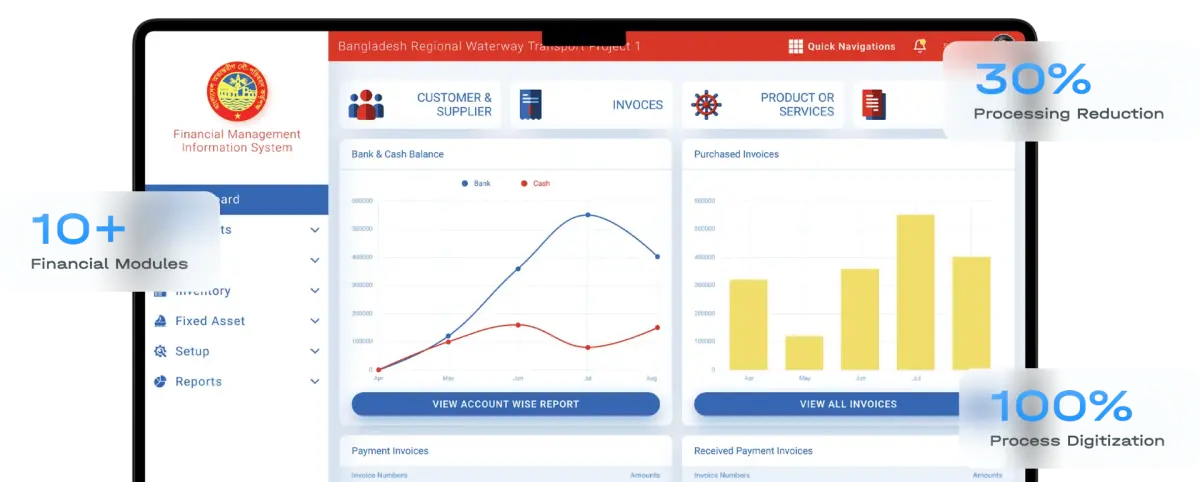
BIWTA implemented a Financial Management Information System to modernize financial operations and strengthen fiscal governance. Legacy systems and manual workflows had limited budget control, transparency, and accountability. The FMIS digitized the complete financial lifecycle, enabling accurate data access, real-time monitoring, and informed decision-making to support efficient public fund management.
Challenges
Manual processes, inaccurate data, weak controls, and limited transparency restricted effective financial planning and governance.
-
Manual Financial Processes: Paper-based workflows caused delays, errors, and operational inefficiencies.
-
Inaccurate Financial Data: Poor data reliability impacted budget execution and resource allocation.
-
Weak Financial Controls: Limited oversight contributed to excess borrowing and accountability gaps.
-
Lack of Real-Time Visibility: Decision-makers lacked timely insights into financial performance.
-
Transparency & Trust Issues: Fragmented reporting reduced governance clarity and public confidence.
Solutions
We delivered an integrated FMIS enabling automation, real-time insights, and strong fiscal controls.
Integrated FMIS Platform
End-to-end digitization of budgeting and accounting processes
Automated Financial Workflows
Streamlined budget releases, expenses, and reconciliation
Real-Time Dashboards
Live visibility into budgets, expenditures, and cash flow
Treasury System Integration
Seamless connectivity with government treasury platforms
Role-Based Access Control
Secure access aligned with finance roles and responsibilities
Analytics & Compliance Reporting
Audit-ready reports supporting transparency and governance
Key Features
A comprehensive financial platform designed for accuracy, control, and transparent public fund management.
Integrated Budgeting & Accounting
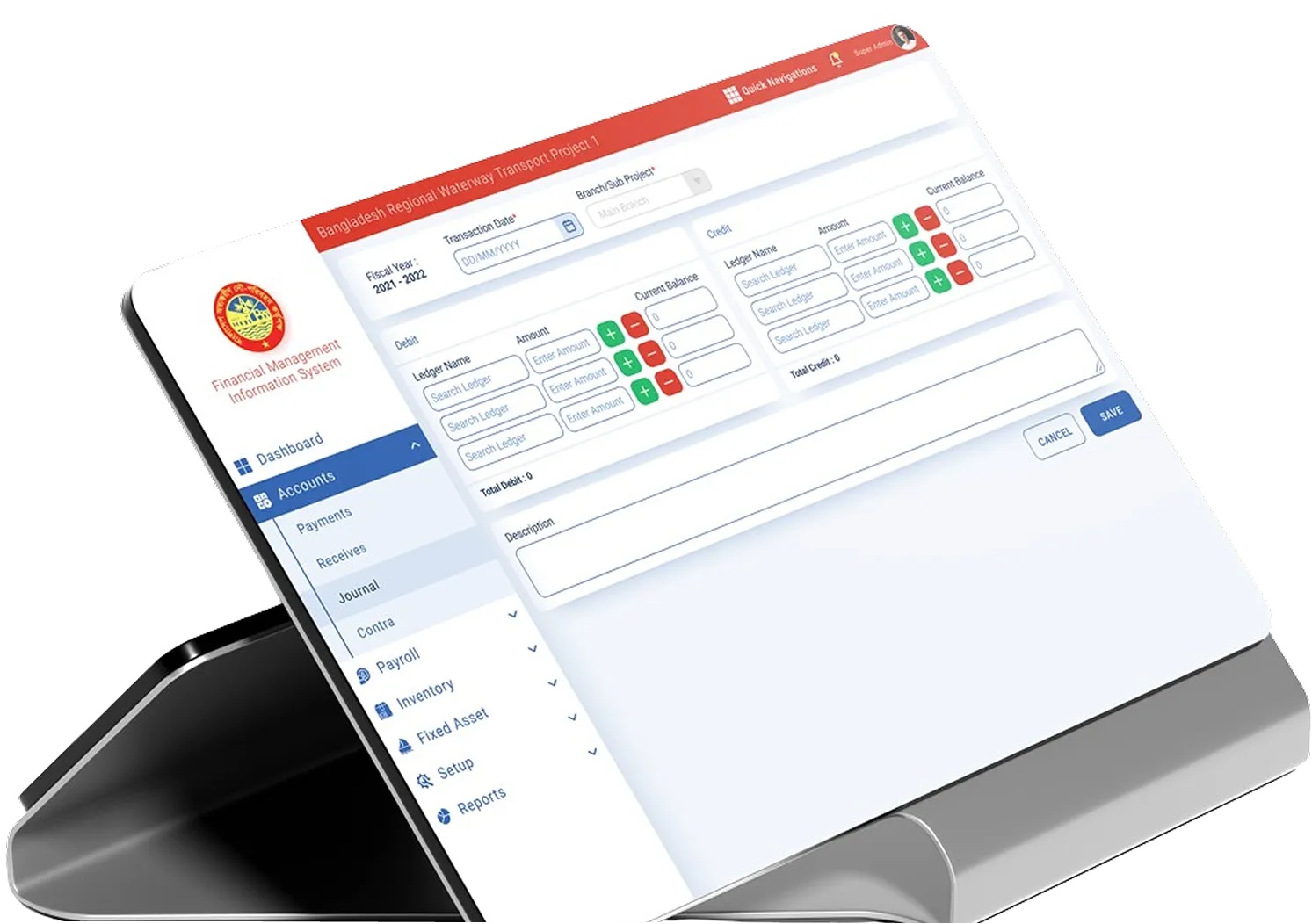
Unified management of budget planning, execution, accounting, and financial reporting workflows.
Real-Time Financial Dashboards
Visual insights into budget utilization, cash flow, and expenditure performance.
Automated Financial Workflows
Digitized approvals, reconciliations, and expense tracking to reduce errors and delays.
Treasury Integration
Centralized oversight through direct linkage with national treasury systems.
Role-Based User Management
Secure, guided workflows for finance officers, auditors, and administrators.
Analytics & Reporting Tools
Compliance-ready reports supporting audits, governance, and informed decision-making.
Impact & Results
The FMIS strengthened financial discipline, improved transparency, and enhanced public sector accountability.
Conclusion
The BIWTA FMIS transformed financial governance by replacing fragmented legacy processes with a unified, transparent, and automated system. By enabling real-time visibility, strong controls, and audit-ready reporting, the platform established a sustainable foundation for accountable public financial management.