


How AI & ML Are Transforming Business Operations in 2025
By Faiz Ahmed Jiad
Artificial Intelligence (AI) and Machine Learning (ML) are revolutionizing the way businesses operate, providing increased efficiency, automation, and data-driven decision-making. As we move through 2025, businesses across industries are leveraging AI & ML to optimize processes, enhance customer experiences, and drive innovation. This article explores the key ways AI and ML are transforming business operations in 2025.
1. Intelligent Automation & Process Optimization
AI-driven automation is streamlining repetitive tasks and optimizing workflows across industries. From robotic process automation (RPA) to smart algorithms, AI is reducing manual work, minimizing errors, and improving productivity.
Key Applications:
Automated customer support using AI chatbots and virtual assistants.
AI-powered supply chain optimization for real-time inventory tracking and logistics.
AI-driven HR automation, including resume screening and employee performance analysis.
2. Enhanced Decision-Making with Predictive Analytics
AI and ML enable businesses to make smarter, data-backed decisions through predictive analytics. These technologies analyze historical data, identify trends, and provide actionable insights for future business strategies.
Key Applications:
Financial forecasting to predict market trends and investment risks.
Personalized marketing strategies based on consumer behavior analytics.
Predictive maintenance in manufacturing to reduce downtime and operational costs.
3. AI-Driven Customer Experience (CX) Transformation
In 2025, businesses are using AI-driven personalization to enhance customer interactions. AI-powered solutions analyze customer preferences and behaviors to provide tailored experiences.
Key Applications:
AI-powered recommendation engines for e-commerce platforms.
Voice recognition and NLP for seamless customer service interactions.
Real-time sentiment analysis to gauge customer satisfaction and improve engagement.
4. Cybersecurity & Fraud Detection
With increasing cyber threats, businesses are leveraging AI-driven security solutions to detect and prevent fraud in real time. ML models identify anomalies, detect breaches, and automate security responses.
Key Applications:
AI-based fraud detection in banking and financial transactions.
Automated threat detection and response for enterprise cybersecurity.
Biometric authentication using AI for enhanced security.
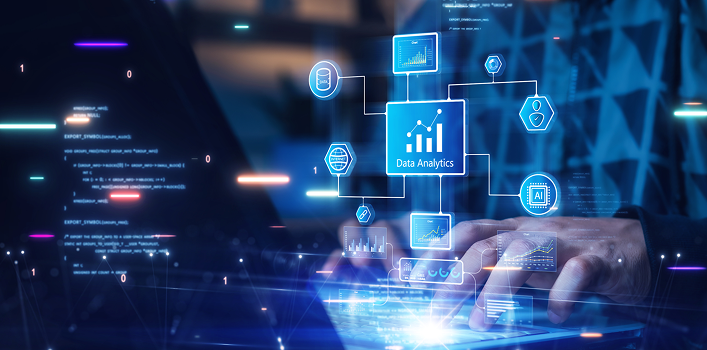
5. AI in Business Intelligence & Data Analytics
AI and ML are making business intelligence (BI) more accessible and actionable. Businesses are using AI-powered analytics platforms to extract insights, generate reports, and enhance decision-making.
Key Applications:
Automated data visualization for real-time business insights.
AI-driven reporting to identify growth opportunities.
Sentiment analysis to track brand perception and market trends.
6. AI in Human Resources & Talent Management
AI is playing a pivotal role in HR and workforce management, transforming hiring processes, employee engagement, and training programs.
Key Applications:
AI-powered recruitment tools to match candidates with job roles.
AI-driven employee engagement programs to improve productivity.
AI-based training modules with adaptive learning for workforce upskilling.
7. AI & ML in Healthcare and Life Sciences
The healthcare industry continues to benefit from AI-driven diagnostics, treatment planning, and drug discovery.
Key Applications:
AI-powered medical imaging for faster and more accurate diagnoses.
Predictive analytics in healthcare to forecast disease outbreaks.
AI-driven drug discovery to accelerate pharmaceutical research.
The Future of AI & ML in Business
As AI and ML technologies continue to evolve, businesses must stay ahead by investing in AI-driven strategies, upskilling their workforce, and ensuring ethical AI usage. The AI-powered future will focus on greater automation, hyper-personalization, and enhanced data security, transforming industries worldwide.
Final Thoughts
AI and ML are no longer futuristic concepts—they are integral to business success in 2025. By leveraging AI-driven automation, predictive analytics, and enhanced cybersecurity, businesses can stay competitive, improve efficiency, and drive innovation.How to Choose the Right Custom Software Development Partner